
Connected Bedroom & Starter Smart Home
A claims-audit route map for building one reliable connected room first: wake light, safe charging, simple automation, and the network habits that keep starter smart-home devices manageable.
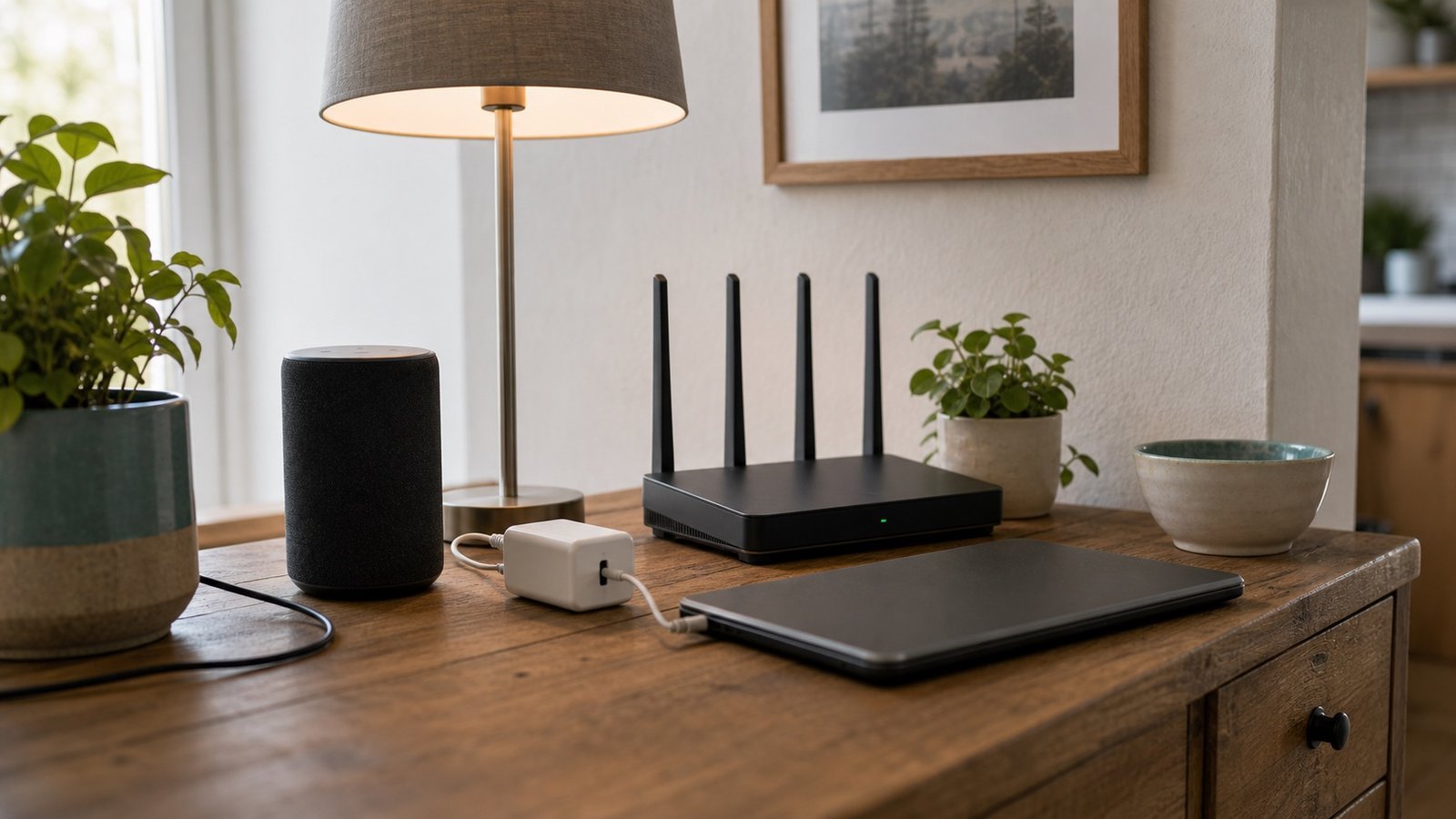
A connected bedroom is the easiest place to learn smart-home discipline, but only if every device claim is checked before purchase: light output, charging standard, app account, battery claim, subscription, hub requirement, and privacy trade-off.
The starter path
| Step | Audit question | Guide |
|---|---|---|
| 1 | Does the winter-light claim state lux and distance? | SAD lamp and sunrise alarm claims audit |
| 2 | Does the charger state certification, wattage, and adapter requirements? | Bedside wireless charger claims audit |
| 3 | Does “no hub” still mean cloud account, 2.4 GHz Wi-Fi, or limited control? | Smart bulbs without a hub |
| 4 | Which ecosystem locks you into what? | Home automation comparison spreadsheet |
| 5 | Is the router ready for connected devices? | Home Wi-Fi security setup |
Shared smart-home accounts also need account hygiene; a family password manager can reduce reused passwords across device apps.
What belongs in a connected bedroom
Start with devices that improve a repeated daily routine and can be audited from source documents: a wake-light routine, a charger with clear certification language, a simple bulb or plug, and motion lighting where battery claims are transparent.
What stays out for now
Pages on bamboo chargers, smart mattress covers, and narrow motion-light variants stay draft until there is enough query evidence and source material to justify them. A connected-bedroom page should not become a pile of thin affiliate variants.